

Over time, water leaks can cause significant damage to your property, and filing an insurance claim might feel overwhelming. You need to act quickly and thoroughly document the damage, ensuring you understand your policy coverage. Effective communication with your insurance adjuster is key, so it’s important to avoid common mistakes when speaking with them. For tips on what not to say to adjusters, check out this helpful resource. By following the right steps, you can improve your chances of a successful claim with Service Pro Restoration Rochester.
Key Takeaways:
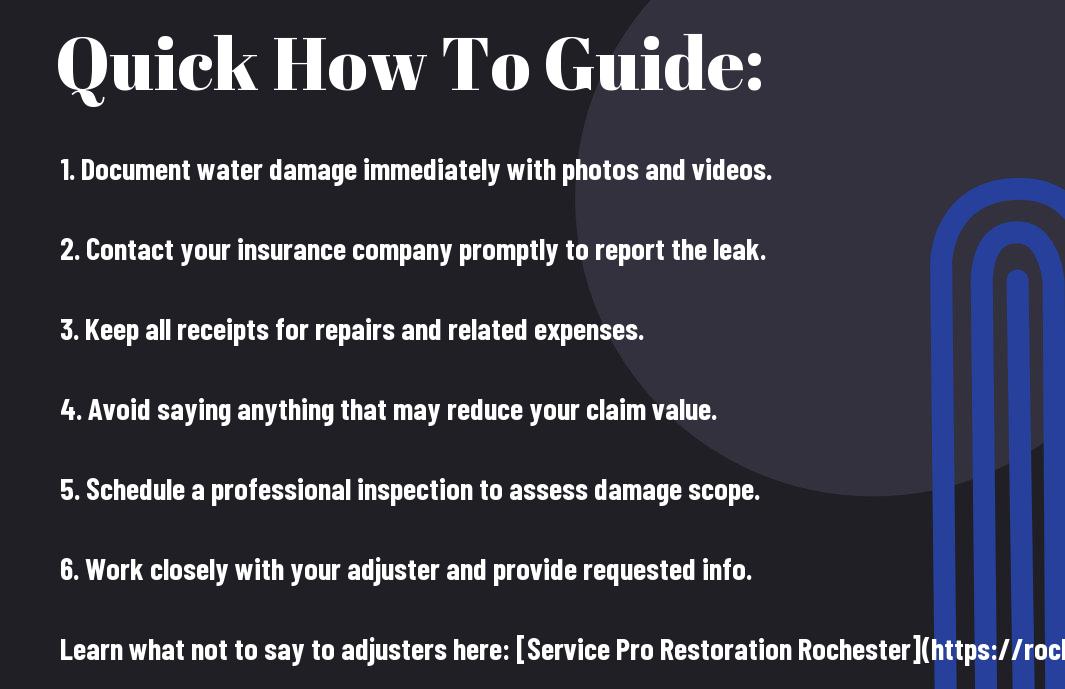
- Document the damage thoroughly by taking photos and videos immediately after discovering the water leak to support your insurance claim.
- Contact your insurance provider as soon as possible to report the leak and initiate the claims process, ensuring you provide all necessary information.
- Keep receipts and records of any repairs or mitigation expenses incurred to present clear evidence of costs related to the leak.
- Avoid making statements to insurance adjusters that may jeopardize your claim; for guidance on effective communication, visit this resource.
- Work with experienced professionals like Service Pro Restoration Rochester who can assist in assessing the damage and communicating with your insurance company to help expedite your claim.
Understanding Water Leak Insurance Claims
Successful claims hinge on clearly knowing what your policy covers, substantiating your claim with thorough evidence, and responding promptly. Water leak claims often require documented proof of damage, such as photos and repair estimates, to support the insurance adjuster’s assessment. Insurance companies assess whether the leak resulted from sudden accidents or ongoing maintenance issues, and that distinction profoundly impacts claim outcomes. Insurers typically evaluate the severity and origin of the leak before approving coverage, so maintaining detailed records throughout the process will aid you in obtaining a fair settlement.
Types of Coverage
Different policies cover water leaks in varied ways. Elements of coverage often include:
- Sudden and accidental leaks from plumbing
- Damage from burst pipes during freezing conditions
- Water damage caused by appliance malfunctions
- Structural damage to walls, floors, and ceilings
- Thou must confirm specifics in your policy documents to avoid surprises
| Coverage Type | Description |
|---|---|
| Sudden Leak Protection | Covers bursts or sudden plumbing failures |
| Appliance Leak Coverage | Includes leaks from dishwashers, water heaters |
| Freeze Damage | Covers pipes damaged by freezing temperatures |
| Structural Repairs | Covers repairs of walls, flooring, ceilings |
| Exclusions | Ongoing leaks or neglect typically excluded |
Common Exclusions
Many policies exclude damage caused by gradual leaks, wear and tear, or lack of maintenance. For example, if a pipe has slowly leaked over time due to corrosion or improper upkeep, insurers frequently deny claims based on these grounds. Damage stemming from flooding or sewer backups also might require separate coverage or add-ons. If you file a claim without verifying these exclusions, it can lead to delays or denials. Thou best off reviewing your specific exclusions with your insurer in advance.
Water damage claims often fail when policyholders mistakenly expect coverage for issues like mold resulting from unresolved leaks, or damage rooted in faulty construction. Thoroughly reading your insurance contract can reveal conditions under which coverage is denied. Ignoring this could leave you financially responsible for repairs. If you want guidance on navigating conversations with adjusters, see what not to say to adjusters for tips to protect your claim.
How to File a Claim
Initial Steps
Start by notifying your insurance company as soon as you identify the water leak. Provide clear details, including when and how you discovered the issue. Request a claim form or start the process online, and ask about any specific requirements or documents needed. Avoid making repairs until your insurer has assessed the damage, unless necessary to prevent further harm. Timely communication sets the stage for a smoother claim experience and faster resolution.
Documenting the Damage
Gather comprehensive evidence of the water damage by taking high-quality photos and videos from multiple angles. Highlight affected areas, soaked carpets, damaged walls, and any personal belongings impacted by the leak. Include dated timestamps if possible, and keep a detailed inventory of damaged items with approximate values. This documentation strengthens your claim by providing tangible proof for the insurer’s review.
Beyond photos and videos, collect receipts for any immediate expenses such as emergency repairs, water extraction, or temporary lodging, if necessary. Write detailed notes describing the progression of damage and any conversations with professionals or adjusters. Such thorough documentation helps avoid disputes and supports your case if complications arise. For tips on effective communication with adjusters, you can visit what not to say to adjusters.
Tips for a Successful Claim
- Document every detail meticulously—photographs, receipts, and timelines help build a solid case.
- Respond promptly to any insurer requests to avoid delays.
- Maintain clear, professional communication, avoiding contradictions or emotional responses.
- Keep copies of all correspondence and notes from phone conversations regarding your claim.
- After initial submission, stay engaged with your adjuster, patiently following up without overwhelming them.
Communicating with Your Insurer
You should approach conversations with your insurer calmly and factually, providing concise updates and responding directly to their questions. Taking notes during calls helps track commitments and timelines. Avoid offering unnecessary information that could complicate the claim. For guidance on effective communication strategies, be cautious of what you might inadvertently say to adjusters by reviewing this resource. Being transparent but measured builds trust and speeds up resolution.
Providing Accurate Information
Every detail you share impacts the outcome of your claim. Exact dates, clearly described damages, and authentic documentation set the foundation for approval. Inaccurate or exaggerated claims risk denial or investigations. Measure damage carefully and report the facts clearly, whether it’s a soaked wall or a warped floorboard. Photos with timestamps and vendor quotes for repairs help substantiate your losses effectively.
Precision in the information you provide cannot be overstated. For instance, labeling water intrusion that began on January 10 as occurring on January 15 could lead to discrepancies with incident reports. Similarly, overstating repair costs without estimates can cause skepticism. Engaging professional evaluators or restoration experts like Service Pro Restoration Rochester to assess and report damages ensures the accuracy and reliability of your claim documentation, minimizing avoidable setbacks.
Factors Affecting Claim Approval
Several elements influence whether your water leak insurance claim will be approved, which means you need to be thorough in preparation. Insurance companies assess the cause of the leak, the extent of damage, and your adherence to maintenance requirements. Coverage limits and exclusions stipulated in your policy can also impact the outcome. Insurance adjusters will scrutinize documentation and your claim’s timing. The sooner you act and provide detailed proof, the better your chances of success. The quality of communication with your insurer additionally plays a significant role throughout the process.
Policy Terms and Conditions
Your insurance policy outlines what types of water damage are covered, including accidental leaks versus slow leaks resulting from neglect. Some policies exclude damage caused by unresolved maintenance issues or gradual wear and tear. You should review your policy sections on exclusions, deductibles, and coverage limits carefully. For example, a homeowner’s policy might cover sudden burst pipes but not damage from ongoing seepage. Understanding these terms helps you tailor your claim accordingly and avoid surprises during the adjustment process.
Timing of the Claim
Filing your claim promptly after detecting the water leak increases its likelihood of approval. Delays can lead insurers to suspect negligence or worsened damage due to your inaction. Some policies have strict deadlines, such as 30 days from the incident, so acting quickly is necessary. Notifying your insurer right away ensures an inspector can assess the damage before conditions deteriorate further. The timing also affects how quickly you receive compensation to begin repairs and mitigate additional losses.
Besides initial notification, maintaining communication throughout the claims process is vital. You should document every interaction with adjusters and provide requested information promptly. Waiting too long between updates might give the impression of disinterest or complicate the claim investigation. Also, consider consulting resources on what not to say to adjusters to keep your claim on solid footing—[here’s a practical guide](https://rochesterwaterdamage.org/getting-insurance-to-cover-water-damage/) that can help you navigate these conversations effectively.
Common Mistakes to Avoid
Underreporting Damage
Minimizing the extent of damage may seem like a way to speed up the claim, but it can backfire. Insurance adjusters rely on your documentation, so any unreported or understated damage discovered later can lead to claim denial or penalties. Thoroughly inspect every affected area, including hidden spots like behind walls or under flooring, and document everything accurately with photos and videos to ensure full coverage.
Delaying the Claim Process
Procrastinating on filing your claim can cause unnecessary complications. Insurance companies often have strict timelines for reporting water damage, sometimes as short as 24 to 48 hours. Acting promptly helps secure timely inspections and expedites repairs, minimizing further damage and avoiding claim disputes. Once you notice signs of a leak or water intrusion, initiate your claim immediately to maintain your policy’s protections.
Waiting too long to notify your insurer can result in denied claims due to policy violations or suspicion of negligence. Additionally, delayed claims complicate evidence collection—water stains may fade, or mold growth can obscure original damage. Filing early not only strengthens your case but also enables restoration professionals to start remedial work sooner, reducing overall costs and disruption. For advice on how to interact with adjusters to avoid missteps, check out these tips from Service Pro Restoration Rochester here.
Following Up on Your Claim
Once your claim is submitted, staying proactive can make a significant difference in how smoothly the process unfolds. Maintain regular contact with your insurance adjuster and keep detailed notes of each conversation. This helps you stay informed about any additional documents needed or updates on repair approvals. Promptly responding to requests ensures the claim doesn’t stall unnecessarily. Keeping all receipts, estimates, and communication logs organized will also provide quick access if you need to reference details later. This disciplined approach often means quicker resolution and less frustration during what can be a stressful time.
Tracking Claim Progress
Most insurers now provide online portals or dedicated phone lines for claim tracking. Log in regularly to monitor updates such as inspection dates, approval status, and payment timelines. If you notice delays or missing paperwork notices, address these issues immediately by contacting your claims representative. Some companies send automated email or text notifications, but calling directly when information isn’t clear can expedite progress. Tracking your claim closely helps you avoid surprises and maintain control over the timeline.
Handling Delays or Denials
If your claim encounters unexpected delays, follow up persistently without letting communications lapse. Document each interaction and ask for clear reasons behind any hold-ups. In cases of denial, study the insurer’s explanation carefully; many denials stem from policy exclusions or insufficient evidence. Gathering additional proof—such as repair estimates or expert assessments—and consulting your policy terms may enable you to challenge the decision effectively. You can also seek guidance from consumer advocacy groups or legal advisors who specialize in insurance disputes.
For example, one homeowner faced repeated delays when the insurer requested multiple inspections despite initial approval. By compiling comprehensive repair receipts and photographic evidence and working closely with Service Pro Restoration Rochester, they clarified the extent of damage and demonstrated timely remediation efforts. This documentation helped overturn the denial, securing full claim coverage. Knowing what not to say to adjusters, as detailed in the guide at Service Pro Restoration Rochester, can further protect your claim from unnecessary complications during these critical conversations.
Summing up
Following this, you can increase the chances of a successful water leak insurance claim by promptly documenting the damage, notifying your insurer quickly, and keeping detailed records of repairs and communications. Be mindful of your words during interactions; for guidance on how to communicate effectively with adjusters, visit what not to say to adjusters. Taking these steps ensures you manage the claim process confidently and maximize your insurance coverage for any water damage.
FAQ
Q: What steps should I take immediately after discovering a water leak to ensure my insurance claim is successful?
A: As soon as you identify a water leak, it is important to act quickly to minimize damage. Turn off the water source to stop further leakage and document the damage with clear photos and videos. Contact Service Pro Restoration Rochester for a professional assessment and start the claims process by notifying your insurance company promptly. Prompt action and thorough documentation help support your claim and demonstrate the extent of the damage.
Q: How detailed should my documentation be when submitting a water leak insurance claim?
A: Detailed documentation is important for a successful insurance claim. This includes photographic evidence of all affected areas, damaged belongings, and the source of the leak. Keep a record of any repair estimates or professional evaluations, such as those provided by Service Pro Restoration Rochester. Also, maintain logs of any mitigation steps you’ve taken, such as water extraction or drying efforts. Detailed records help the insurance adjuster understand the full scope of the damage.
Q: Are there phrases or statements I should avoid when communicating with insurance adjusters during a water leak claim?
A: Yes, when speaking with insurance adjusters, it is best to avoid admitting fault or making speculative statements about the cause or extent of the damage. Instead, focus on presenting facts and documentation. For more guidance on effective communication, you can visit our resource on what not to say to adjusters. Clear, factual communication helps to avoid misunderstandings that could delay or reduce your claim.