

Just like any business, homeowners insurance companies aim to minimize their costs, and this often results in claims being denied. Understanding the common reasons for denial, particularly regarding water damage, is important for managing your expectations. Being prepared for discussions with adjusters can make a significant difference; for instance, knowing what not to say can help protect your claim. For tips on communicating effectively, check out this guide on what not to say to insurance adjusters.
Understanding Homeowners Insurance
While homeowners insurance may seem straightforward, it encompasses various elements that protect your property and financial investment. This type of insurance is designed to cover costs related to damage or loss to your home and belongings, as well as provide liability protection if someone is injured on your property. Familiarizing yourself with the ins and outs of homeowners insurance is vital to ensure you are adequately safeguarded against unforeseen circumstances.
What is Homeowners Insurance?
Understanding homeowners insurance is vital as it serves to protect your dwelling, personal property, and liability against damage or legal claims. Typically, this insurance policy covers costs associated with disasters, theft, and accidents that occur within your home. By selecting the right policy type, you ensure that your financial interests are well-protected.
Common Coverage Types
Common coverage types in homeowners insurance often include:
- Dwelling Coverage: Covers the structure of your home.
- Personal Property Coverage: Protects your personal belongings.
- Liability Coverage: Offers protection against lawsuits.
- Additional Living Expenses: Covers costs if you are temporarily unable to live in your home due to damage.
- Medical Payments Coverage: Provides for medical expenses for guests injured on your property.
The right combination of these coverage types ensures that you’re protected against various risks and liabilities.
| Coverage Type | Description |
| Dwelling Coverage | Protection for your home’s structure. |
| Personal Property Coverage | Insurance for belongings inside your home. |
| Liability Coverage | Covers legal fees if you are sued. |
| Additional Living Expenses | Paid if you need temporary housing. |
| Medical Payments Coverage | Covers minor injuries to guests. |
Homeowners insurance policies can be tailored to fit your needs, and it is beneficial to understand the options available to you. Keeping your policy updated ensures you are always equipped to handle unexpected situations. The following coverage types are common:
- Earthquake Coverage: For protection against earthquake damage.
- Flood Insurance: To cover water damage not included in standard policies.
- Replacement Cost Coverage: Provides full replacement value for damaged items.
- Scheduled Personal Property: For high-value items requiring additional coverage.
- Home-based Business Coverage: Covers business operations conducted from home.
The combination of these options allows you to create a comprehensive policy that meets your individual needs.
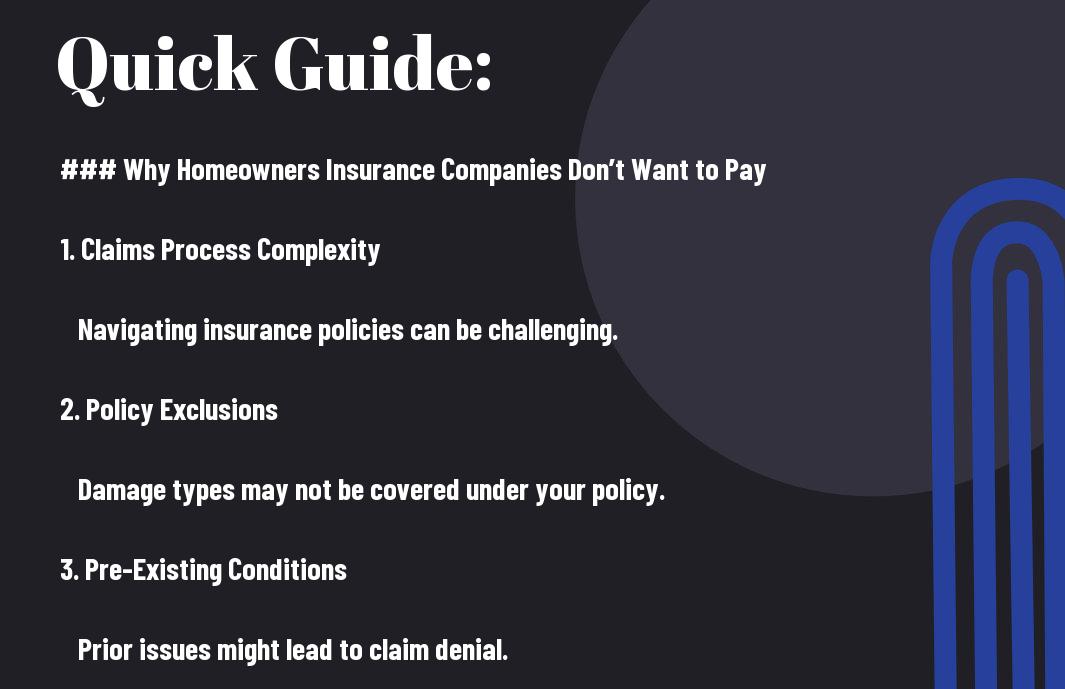
Reasons Insurance Companies Resist Payment
Some homeowners find that their claims are denied or underpaid due to the insurance company’s efforts to minimize losses. Insurers often scrutinize the reasons for claims closely and may look for any justification to reduce their payouts, which can leave you feeling frustrated and unsupported.
Policy Exclusions
For many homeowners, the fine print of their insurance policy reveals exclusions that can lead to denied claims. Common exclusions include specific types of water damage caused by poor maintenance or flooding, which often leaves you unprotected when you need it most.
Insufficient Documentation
Policyholders sometimes underestimate the importance of providing comprehensive documentation of their claims. Your ability to substantiate the details and extent of the damage with thorough evidence directly impacts the decision made by your insurance adjuster.
With clear and organized documentation, you can significantly strengthen your claim. This includes photographs of the damage, repair estimates, and any correspondence related to the incident. It’s important to maintain a well-documented record, as this helps to establish credibility and may prevent delays or denials in your claim. For tips on what to avoid saying to adjusters, visit this guide.

Water Damage Claims
Once again, homeowners face challenges with water damage claims as insurers frequently resist paying out. Factors like policy exclusions and underestimating the severity of damage can lead to disputes. If you’re interested in real experiences, check out this thread on Reddit regarding Insurance doesn’t want to pay half of my water mitigation ….
Common Reasons for Denial
For many claims, denial often stems from insufficient documentation, lack of coverage for specific incidents, or failure to report damage promptly. Homeowners might be unaware that their policy doesn’t cover certain types of water damage, leading to frustrations when claims are dismissed.
Steps to Take After Water Damage
On experiencing water damage, your first step should be to stop the source of the leak if it’s safe to do so. Next, document the damage thoroughly with photos and a detailed inventory, which will help support your claim. Contact your insurance provider to report the damage and begin the claims process.
Damage assessment is vital in handling your water damage claim effectively. The more evidence you provide, the greater your chances of a successful payout. While it’s important to stay in contact with your insurance company, be mindful of your words. Avoid making statements that could inadvertently weaken your claim. For guidance on what not to say to adjusters, check out this link: What Not to Say to Insurance Adjusters.
Tips for Filing Successful Claims
Despite the challenges homeowners face with insurance claims, there are effective strategies to increase your chances of approval. Keep these tips in mind:
- Document all damages thoroughly.
- Notify your insurer promptly.
- Gather supporting evidence, such as photos or receipts.
- Be truthful and concise in your communication.
Perceiving your claim through this lens can significantly enhance your chances of receiving compensation.
Prepare Proper Documentation
Now is the time to collect all relevant documentation to bolster your claim. This includes photos of the damage, repair estimates, and any maintenance records. Effective documentation not only supports your claim but also demonstrates your diligence to the insurance company.
Know Your Policy Details
Some homeowners overlook the importance of fully understanding their insurance policy details. Familiarize yourself with the specific coverage, exclusions, and limitations that apply to your situation. Knowing what is included and what isn’t can prevent misunderstandings during the claims process.
Plus, pay close attention to the definitions and terms in your policy, as they define what constitutes a covered loss. By understanding these details, you empower yourself to advocate for your rights effectively. This can prove vital in disputes over water damage claims. For further insights on communication with adjusters, check out this guide on what not to say to insurance adjusters.
Factors Influencing Claim Approval
Your homeowners insurance claim may face hurdles based on several key factors. Understanding these can help ensure a smoother process. Consider the following:
- The specifics of your coverage
- Your deductible amount
- The cause of the damage
- Promptness in reporting the claim
This knowledge can empower you to navigate potential challenges effectively. For further guidance, look at this Consumer advisory: Take action when home insurance is ….
Severity of Damage
To increase your chances of a successful claim, you should document the severity of the damage thoroughly. Insurers often evaluate the extent of damage when deciding on coverage; significant damage usually has a higher chance of approval than minor issues.
Timeliness of Claim Submission
Any delay in submitting your claim can jeopardize your chances of approval. Insurance companies typically require prompt reporting of damages to assess the situation accurately.
It is imperative to file your claim as soon as possible after the damage occurs. Most policies stipulate a specific time frame in which claims should be reported, and exceeding this period can lead to outright denial. Being proactive can significantly enhance the efficiency of your claims process. Additionally, knowing what to avoid saying can be beneficial; for tips on this, check out this article on what not to say to adjusters.

Pros and Cons of Homeowners Insurance
Unlike other investments, homeowners insurance comes with its own set of advantages and limitations. Understanding these can help you make informed decisions about your coverage.
Pros and Cons of Homeowners Insurance
| Pros | Cons |
|---|---|
| Financial protection against significant losses | Premium costs can be high |
| Peace of mind for home and belongings | Coverage exclusions and limitations |
| Liability protection for accidents | Claims can be denied |
| Eligibility for mortgage requirements | Potential premium increases after claims |
| Additional living expenses coverage | Complex claims process |
Advantages of Being Insured
Insured homeowners experience significant peace of mind, knowing they are protected against unforeseen incidents like fire, theft, or natural disasters. This financial safety net allows you to focus on maintaining and enjoying your home without constant worry about potential losses.
Disadvantages and Limitations
Little do many homeowners realize, insurance policies often come with limitations that can hinder the protection you thought you had. Understanding these restrictions is imperative for proper risk management.
For instance, certain types of water damage claims may be denied if they result from negligence or lack of maintenance, leading to unexpected out-of-pocket expenses. Furthermore, various exclusions or coverage limits can leave significant gaps in protection, often uncovered until it’s too late. It’s vital to review your policy thoroughly and consult resources to avoid common pitfalls, including what not to say to insurance adjusters, as highlighted in this [guide](https://rochesterwaterdamage.org/what-to-avoid-telling-insurance-adjusters/).
Summing up
Now that you understand the reasons homeowners insurance companies often resist payouts, you can better navigate the claims process. These companies may deny claims for various reasons, such as insufficient documentation or policy exclusions. It’s important to be cautious in your conversations; certain phrases can weaken your case. To ensure you’re prepared, consider exploring what not to say to insurance adjusters for optimal communication. Visit this link for guidance: what not to say to adjusters.